Why a First Session Feels Easier When It Has No Score
A first sport session without a score helps you learn how the activity works, practice a basic skill, and choose a format that fits your comfort.
You step onto a badminton court, hear shoes squeak, and realize you are not sure where to stand. A first sport session without a score gives you room to learn the movement itself before keeping track of points or comparing your play with anyone else’s.
That can make the session feel more like a lesson in rhythm than a performance. You can notice how a racket feels in your hand, how much space a shot needs, and what happens when you adjust your position.
A first sport session without a score shifts attention to movement
Keeping score asks you to track an outcome. During an unfamiliar activity, that can compete with the simpler work of learning how a movement begins, where your balance goes, and how your body responds to a cue.
Without points, a coach or partner can repeat one motion without stopping to declare who won. You might practice rolling a ball toward a target, passing at an easy pace, or stepping through a basic dance pattern. The useful result is clearer feedback about the movement, not a verdict on your ability.
Think of learning a new movement like adjusting a desk lamp: you turn it a little, see what changes, and make another small adjustment. A no-score drill gives you that chance to notice cause and effect without rushing to the next point.
Choose a session format that matches how you learn
A no-score activity can still have structure. A coached introduction, an open practice, and a modified game offer different ways to learn, so check what the session actually involves rather than relying on a label such as “casual.”
A coached introduction gives you a sequence to follow
A beginner class can break an activity into manageable pieces: a demonstration, a short practice, and a cue to try again. This suits someone who likes clear directions and wants to know what to focus on first.
The tradeoff is that you may receive direct feedback or practice in front of others. If you prefer more room to experiment, ask whether the instructor includes independent practice or offers a quieter beginner session.
An open practice leaves more room to explore
Open practice may let you repeat a skill at your own pace, such as bouncing a basketball, serving a ball over a net, or trying a climbing gym’s introductory movement area. It suits people who learn by doing and want to discover which parts feel natural.
The session may offer less explanation than a class. Before joining, ask who can help with a basic question and whether the space is intended for beginners.
A modified game connects practice to play
A simplified game can help you understand how a skill fits into a group activity. In a no-score volleyball drill, for instance, players might focus on keeping the ball moving rather than winning a rally.
Ask what happens when someone needs a pause or wants a simpler role. If the activity moves too quickly, a coach-led drill may give you a more useful starting point.
Use a short practice goal to make the session useful
Pick one movement to pay attention to instead of trying to master the whole sport. In tennis, you might focus on making contact with a gentle feed; in a dance class, you might focus on following the beat through one short sequence.
Keep the goal observable. “Understand the basic serve motion” is easier to check than “be good at tennis.” At the end, you can ask yourself whether you can repeat the motion, name the cue that helped, or identify what still feels unclear.
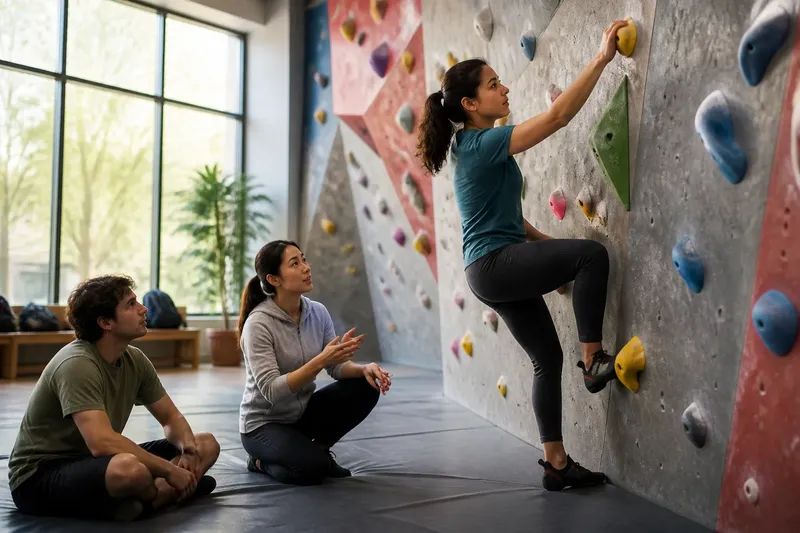
Here is a fully worked invented example. Imagine Maya, who has never tried indoor climbing, signs up for a beginner session that includes a no-score movement drill. Before starting, she tells the instructor she wants to learn how to place her feet; during the drill, she watches a demonstration, tries the route, and listens for one cue about shifting her weight. She tries again using that cue, then checks whether she can describe where her feet went and what changed. The result is a specific decision: if the foot placements make more sense and she wants to keep practicing, she can book another beginner session; if the instruction still feels too quick, she can ask about a smaller class before choosing a next visit.
Check these details before you join a no-score session
- Session description: Check whether it says beginner, introductory, or all levels; if it names prior skills, then ask the organizer whether those are required, or choose a session with clearer beginner guidance.
- Activity format: Check whether the plan includes drills, open practice, or a modified game; if there is time to repeat a movement, then it may suit skill learning, or choose a coached introduction if the format is unclear.
- Equipment: Check whether the venue supplies items such as rackets, balls, or climbing gear; if equipment is not included, then ask what to bring, or select a session that states what is provided.
- Clothing and footwear: Check the organizer’s guidance for shoes and clothing; if your usual items do not meet it, then follow the venue’s instructions, or ask whether an alternative is acceptable before attending.
- Pause options: Check whether participants can rest, observe a demonstration, or step out of a drill; if those options are available, then use them when you need a moment, or ask about a slower session if they are not.
- Instruction and feedback: Check who leads the activity and how participants can ask for help; if a coach or designated helper is available, then bring one specific movement question, or choose a session with more direct instruction if no support is described.
Answers to common questions about a first no-score session?
Do I need to know the rules before I attend?
Usually, you can learn basic rules as the activity unfolds, but session requirements vary. Check the description and ask the organizer whether you need to know anything beforehand.
What should I say if I am new to the activity?
Try a simple request: “This is my first time; can you show me the first movement?” You can also ask whether you may watch a demonstration before joining in.
What if the pace feels too fast?
Ask whether you can repeat a simpler version, take a pause, or move to a beginner drill. If the session cannot offer a pace you can follow, ask about another format rather than forcing yourself to keep up.
How can I tell whether the session helped?
Check whether you can name one movement you practiced and one cue that made it clearer. If you can, decide whether you want more practice; if not, look for a session with slower instruction or more demonstration.
Let a no-score session point to your next practice
A first sport session without a score is most useful when it leaves you with a clear next question: Do you want more explanation, more time to repeat a movement, or a chance to try that movement in a game? The answer can guide your choice of class or activity without making one visit a test of whether you belong.
Before you leave, note the one cue you want to remember. A short phrase such as “look at the target before passing” or “shift weight before stepping” gives your next practice a concrete starting point, even if the session itself felt unfamiliar.