The All-or-Nothing Story of a Missed Week
A missed week in a movement habit can disrupt your rhythm. Choose a realistic next session, adjust for what changed, and make room for activity again.
After a week away, the familiar gym entrance can feel like a place you have to earn your way back into. A missed week in a movement habit is easier to handle when you treat it as a scheduling change, then decide what the next session needs to accommodate.
A missed week in a movement habit calls for a practical reset
Start by identifying what changed. A demanding work stretch may call for a different time or a shorter trip; poor weather may point toward an indoor option; illness or injury may mean waiting or getting professional guidance before resuming.
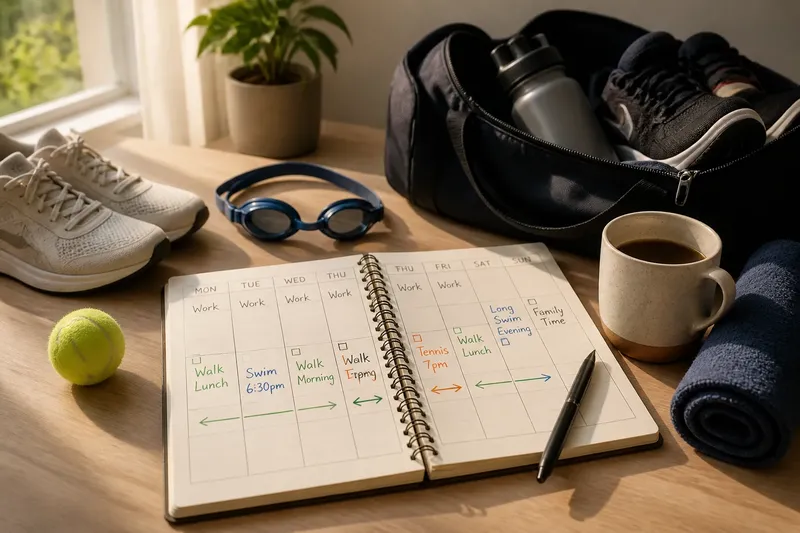
Think of a weekly plan like a calendar with movable blocks, not a row of dominoes. One block can shift without requiring you to rearrange every other part of your life.
That distinction can help you protect the activity you enjoy while changing the part that stopped working. If your evening court time conflicts with family plans, for instance, the issue may be the time slot rather than your interest in playing.
Match the next session to the reason you paused
Use the interruption as useful information, not as a reason to punish yourself. A schedule problem, a weather problem, and a health concern call for different choices.
- If work or caregiving took over: Check your calendar for a realistic opening. If the usual slot is still crowded, choose a different day or a walk near home; if another slot is open, reserve that time for your familiar activity.
- If weather disrupted an outdoor plan: Check the forecast and the availability of an indoor alternative. If the park or court is unpleasant or closed, choose a community center or indoor walk; if conditions are comfortable, return to the outdoor route.
- If transportation made the outing difficult: Check how you would reach the location and whether a closer option is available. If the trip remains inconvenient, choose a nearby route or venue; if transport is workable, keep the familiar destination.
- If illness or injury caused the pause: Check whether symptoms or recovery still raise concerns. If you are unsure what activity is appropriate, consult a qualified health professional; if you have clear professional guidance, follow it rather than using a routine as a substitute.
- If the activity itself stopped appealing: Check what part you miss, if anything: the company, the setting, or the movement. If another format sounds better, try a walk with a friend or casual court time; if the original activity still appeals, keep it and change only the timing or company.
- If the venue or group changed: Check current opening details, access, and whether your usual companions are available. If the old arrangement no longer fits, find a nearby venue or invite someone for a different activity; if it is still workable, contact the group and resume the usual plan.
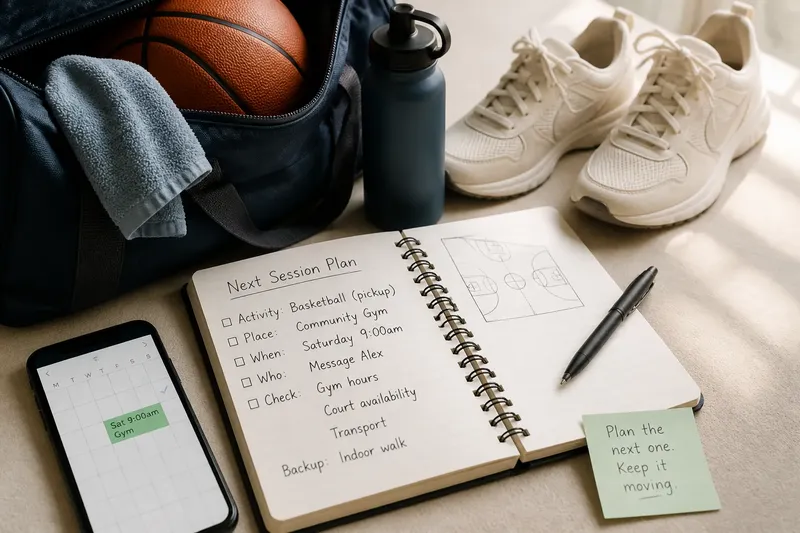
Say you usually play pickup basketball after work, but a caregiving week left no time for the game. You check the coming week’s calendar and see that the evening slot is still full, while a free weekend morning is available; you message a teammate to ask whether the gym is open for casual play, then choose a short visit there instead of adding a make-up game. The observable result is a plan that fits the actual opening, with the tradeoff that it does not recreate your usual group night.
Make the return plan concrete enough to use
A useful plan names the activity, place, and practical arrangement. “Move more soon” leaves every decision for later; “walk the river path with Maya after work” makes the next choice clear.
Before you go, check the details that could derail the outing: venue hours, court access, weather, transportation, and whether a friend has confirmed. If a detail is uncertain, choose a backup such as a neighborhood loop or an indoor community space rather than leaving the whole plan dependent on one condition.
Keep the session compatible with your current circumstances. You can return to a familiar route or group without trying to reproduce every part of the routine exactly as it was.
Notice what the first outing tells you
Pay attention to practical signals: whether the location was easy to reach, whether the time worked, and whether you enjoyed the activity. Those details can guide the next plan more reliably than a broad verdict about whether you are “back.”
Write down one useful observation if that helps, such as “the park was crowded after work; try the morning path.” Keep it focused on a decision you can make, not a score for your character or effort.
If the outing felt awkward, identify what specifically got in the way. A crowded gym might call for a quieter hour; a long trip might point to a closer venue. Change the part that caused friction before abandoning an activity you still value.
What should you consider before returning?
Should you make up the sessions you missed?
No need to turn missed activity into a debt. Choose the next session for the time and energy you have now, rather than adding extra activity to compensate.
What if the original schedule no longer works?
Keep the activity if you still want it, but test a different time, location, or companion. If none of those arrangements fit, choose another form of movement that suits your current routine.
When should illness or injury change your plan?
If symptoms, pain, or recovery leave you uncertain about returning, ask a qualified health professional for guidance. Follow that advice instead of treating a missed week as a reason to push through.
How can you make the next outing easier to arrange?
Name the activity, place, and any person you need to contact, then check access and timing. If one part is uncertain, decide on a workable alternative before the day arrives.
Keep the parts of movement you still want
Sometimes the valuable part of a routine is not its format. You may miss the conversation on a neighborhood walk more than the route, or enjoy the familiar gym more than a demanding workout.
Let that preference shape what comes next. A relaxed rally, a walk with a neighbor, or a visit to the community pool can preserve the social or sensory part of an activity while making the arrangement fit again.
When you plan after a missed week in a movement habit, use the reason for the pause to choose a workable time, setting, or format. Check the practical details, make one clear arrangement, and leave room to adjust if your circumstances still call for it.