One Long Evening or Three Short Windows?
Compare one long evening with three short windows for recreational movement, then choose a weekly rhythm that fits your energy, transitions, and commitments.
Should you set aside one long evening for recreational movement or fit in three short windows? The answer depends less on an ideal schedule than on what happens before and after each outing: work, meals, travel, family plans, and the energy you have left.
Think of the two patterns as different containers for the same activity. A long evening gives you room to settle in; shorter windows can slip between ordinary commitments. To choose, start with the week you actually have, then test how each option feels in practice.
Start with the commitments that already shape your week
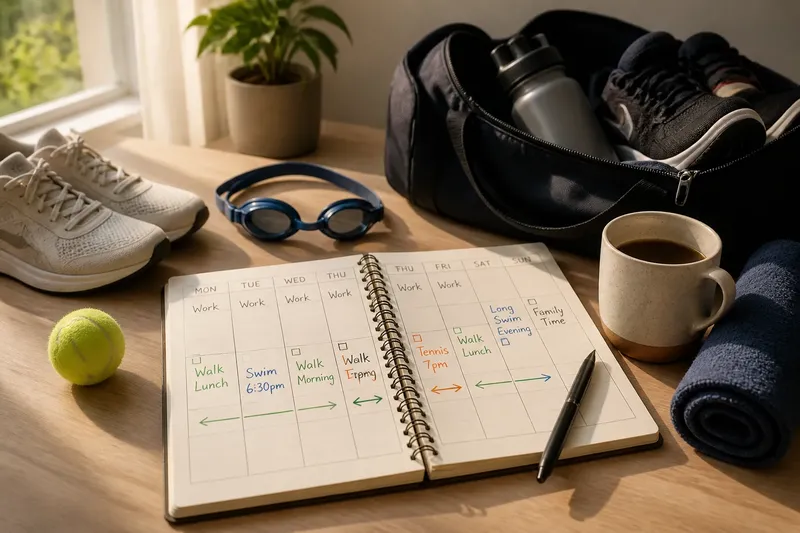
Open a calendar and mark the fixed parts of a typical week: work or classes, caregiving, appointments, regular errands, and plans you do not want to displace. Add the travel time that comes with them. A session that looks open on a calendar may be crowded once you include getting to a pool, park, court, or walking route.
Now mark the times when movement is plausible rather than merely available. You might have an open evening but feel drained after a long day, while a shorter gap after lunch may suit a walk or an easy ride. Keep the first pass realistic: the aim is to find openings that could survive an ordinary week, not an unusually quiet one.
Choose the recreational activity before comparing schedules. A casual basketball run, a swim, a dance class, and a long walk have different setup needs. Consider the venue’s opening hours, whether you need to book, what equipment you must bring, and how long it takes to change or clean up afterward.
Compare the transition cost of each pattern
A long evening has fewer separate starts. You may pack once, travel once, and have time to warm up, move at an unhurried pace, and cool down. That can suit activities that feel better after you have settled in, such as a relaxed bike ride on a longer route or an evening at a community tennis court.
The tradeoff is that the whole block has to stay clear. A late meeting, a family dinner, or a tiring commute can make the plan difficult to keep. If reaching the venue is itself a substantial transition, a long session may also take more of the evening than the activity alone suggests.
Three short windows ask for three separate transitions. You may need to change, gather your things, travel, and return each time. But the activity can be easier to fit around a busy week, especially when the venue is nearby or the movement can begin at home, in a local park, or along a familiar route.
To compare fairly, write down the whole sequence for each option: preparation, travel, activity, and return. A short window is not automatically convenient if it requires a complicated trip; a long evening is not automatically demanding if you can walk to the activity and come home without rushing.
Match the rhythm to your energy and the activity
Think about when you tend to have usable energy, not when you wish you did. If evenings often become crowded or tiring, three modest opportunities at different points in the week may feel more workable. If you enjoy having time to warm up and stay with one activity, a single longer outing may be more satisfying.
The activity itself can guide the decision. A swim may involve changing and showering, making repeated short visits feel like extra work. A brisk walk from home can start with little preparation, so shorter windows may fit naturally. For a social game, check when other people are available; the group’s schedule may matter more than your preference for a particular pattern.
Also notice whether a session needs a particular mood or setup. A dance class with a fixed start time may belong in one protected evening. A casual walk can be split across several openings without much ceremony. The useful question is not which pattern is more disciplined, but which one lets you begin without turning every outing into a negotiation.
Choose a pattern you can adjust without rebuilding the week
Say you have one evening with a nearby recreation center and several smaller gaps around errands. Imagine you enjoy swimming but find that changing and traveling take effort. You might reserve the evening for one unhurried swim and keep a nearby walk as an option for a day when the pool plan does not fit; the observable result to watch for is whether the outing feels straightforward to start and leaves the rest of the evening manageable.
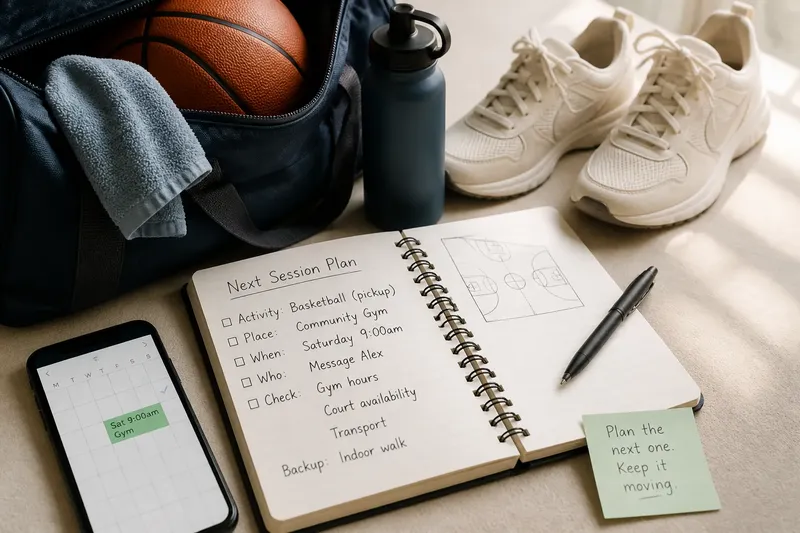
For your own choice, give each pattern a simple trial period that fits your calendar. Put the planned windows in the calendar, including travel and preparation, and decide in advance what counts as a reasonable session. That could mean an easy walk around a neighborhood loop or time spent practicing serves at a court, rather than an ambitious target that makes a tight window impossible.
After each planned opportunity, make a brief note: Did you start when expected? Was the transition awkward? Did the activity suit your energy? A missed window can reveal a scheduling problem rather than a lack of interest. If the venue was too far away, try a closer option; if the evening repeatedly filled up, consider shorter windows or a different day.
Keep the trial flexible, but avoid changing every part of the plan at once. If the activity is enjoyable but the time is not, move the time. If the time works but the journey is a nuisance, consider a nearer place or an activity with less preparation. Small adjustments make it easier to identify what is getting in the way.
How should you decide between one evening and three windows?
Is one long session better for a beginner?
Not necessarily. A longer block can leave room to settle into an activity, but a shorter outing may feel easier to fit around a new routine. Choose the option that makes starting feel manageable, and keep the activity comfortable enough for your current experience.
Can short windows still feel like proper recreation?
Yes, if the activity fits the time you have and you can begin without elaborate preparation. A walk, a short swim, or casual practice at a nearby court can be enjoyable on its own rather than a fragment of a larger workout.
What if the activity takes longer than the session?
Include changing, travel, setup, and return time when comparing patterns. If those transitions dominate a short window, a longer outing may make more sense; if you can simplify the trip or choose a nearby venue, shorter visits may become practical.
Should I keep both patterns in the same week?
You can, if doing so fits your commitments and keeps the plan easy to understand. For example, one longer group game and a separate neighborhood walk serve different purposes, but there is no need to add both if one pattern is enough.
Protect the time without making it brittle
Once you choose, make the plan visible. Add the outing to your calendar, set out shoes or a swim bag ahead of time, and let anyone affected by the schedule know when you expect to be away. For a shared activity, confirm the meeting place and time so the outing does not depend on last-minute guessing.
Keep a nearby alternative for disruptions. If rain changes an outdoor plan, an indoor walk through a public recreation center may work; if the pool is unexpectedly unavailable, a walk along a familiar route could preserve the time without requiring a new schedule. Check the venue’s own instructions or local rules when they affect access or use.
When comparing one long evening with three short windows, use the main search phrase—one long evening or three short windows—as a question about fit, not a test of commitment. A good weekly rhythm leaves enough room for the activity, the transitions, and the life around them. Start with the pattern that seems easiest to enter, then keep the parts that make it pleasant and revise the parts that repeatedly get in its way.